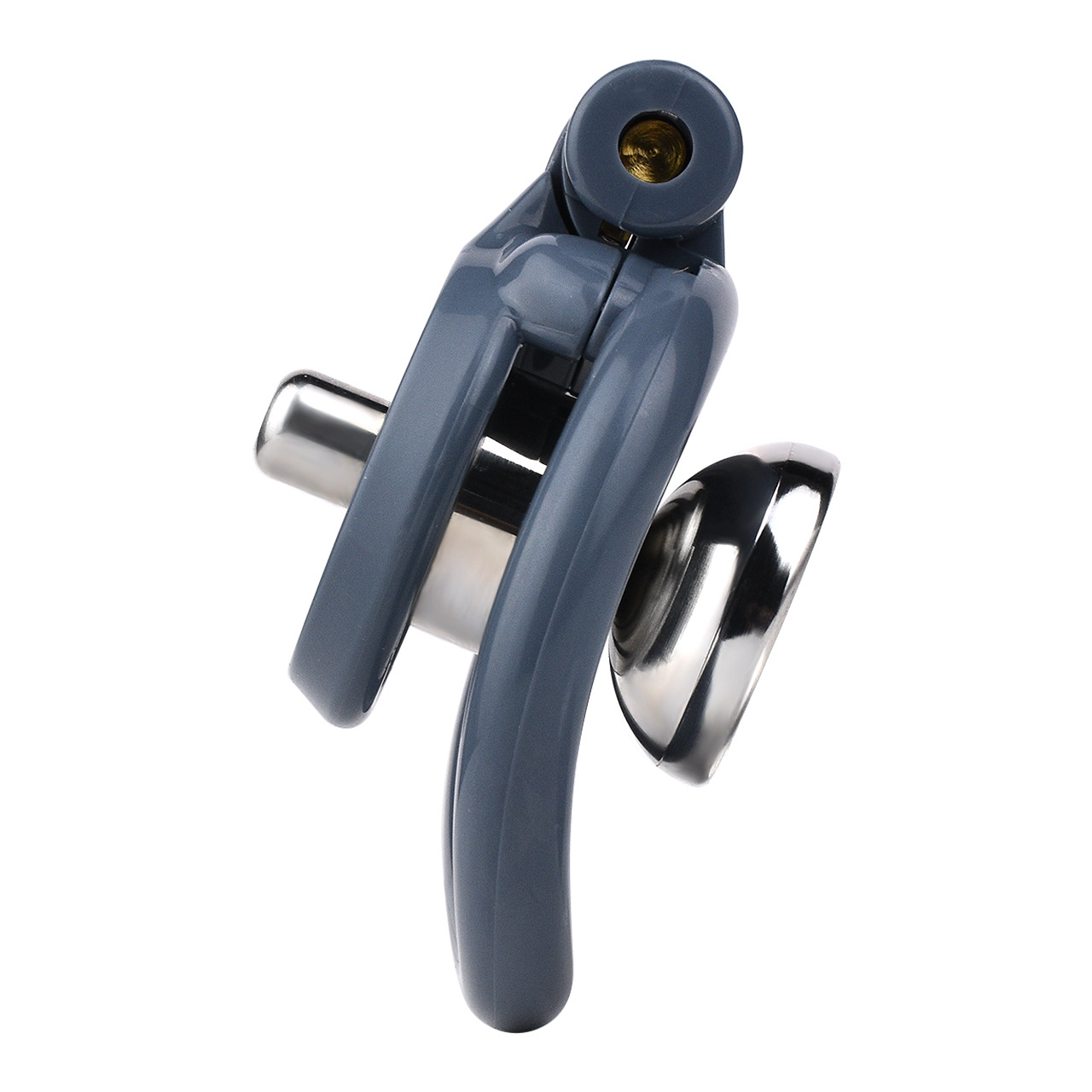

Inverted Plug vs. Urethral Tube: What Is the Difference?
An inverted plug and a urethral tube can appear in the same photograph. They can also share a product title. That is where a surprisingly persistent misunderstanding starts: shoppers see “inverted,” notice a metal attachment, and assume the device must involve a urethral insert.
It does not follow. An inverted plug is the broader component responsible for the inward-facing configuration. A urethral tube is a narrower component intended to enter the urethral opening. Some devices combine them; others do not. If you want an inverted chastity cage without a urethral tube, these three distinctions will help you understand the descriptions you encounter.
Myth: Every inverted cage includes a urethral tube
Fact: “Inverted” describes a configuration, not a complete list of components. A ball, cylinder, or shaped inverted attachment and a urethral tube have different functions. Identifying one does not establish that the other is present.
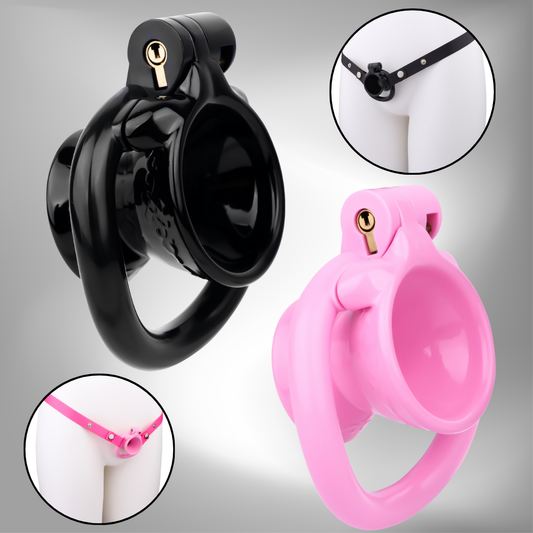
Look through the inverted chastity cage collection and you will find several ways of describing the inward-facing component. The broad name is useful for finding the category. To understand a particular model, you need its component description and a view from the side or behind the front plate.
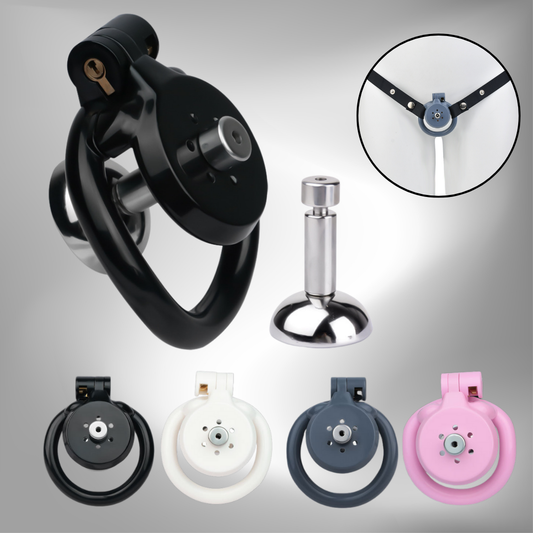
The Flat & Inverted Chastity Cage - Small to Large Inverted Plugs, for example, offers a plain flat model and separate S, M, and L inverted-plug versions. Its description identifies 304 stainless steel and optional PU straps. It does not identify a urethral tube among those model choices.

The important difference is visible in the shape of the parts, not the polish or the material. A broad inverted attachment does not become a urethral tube because it is metal. A tube does not become an inverted plug because it is supplied with an inverted cage.
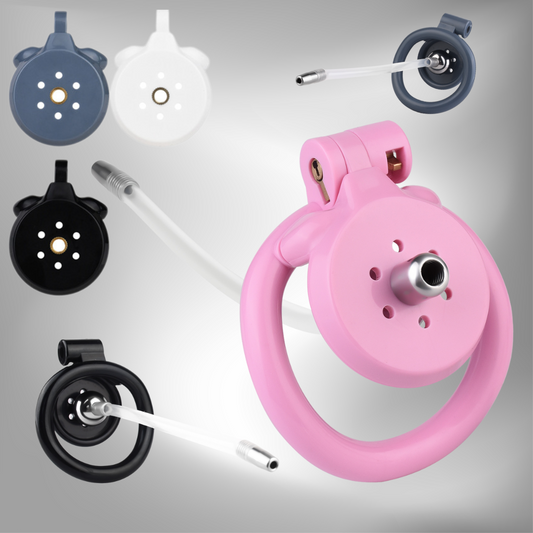
Nor does a central opening settle the question. A hole in the faceplate may be just that: an opening. Without a component description, it is not evidence that a tube is built in, included loose, or needed for assembly. When a gallery shows several possible builds, read each view alongside the words describing it.
Myth: If one part is removable, the whole configuration is interchangeable
Fact: “Removable” describes the particular noun that follows it. A removable inverted plug, a removable urethral tube, and a removable front cover are three separate claims.
The Lightweight Chastity Cage with Removable Inverted Plug and 4 Base Rings illustrates the first arrangement. The catalog identifies an ABS resin body and a removable 304 stainless steel inverted plug. The gallery shows that broad metal component beside the cage. The description is talking about the inverted attachment itself.

A different product may have a fixed inverted cylinder plus a removable silicone urethral tube. Taking out the tube would leave the cylinder in place. The word removable is true in both cases, but it refers to different things.
There is another limit to the term: a component being detachable does not establish that the device is intended to be worn without it. A part may detach for assembly or cleaning. It may also be available as an optional configuration. Those possibilities need to be identified for the model; a visible screw or a loose component in a photograph cannot decide the question.
This matters when looking at flat chastity cages that share a page with inverted versions. A plain flat option is a named configuration. It should not be assumed to be the result of removing any part from any inverted model.
If your preference is a cage without a urethral insert, choose a version explicitly described that way or obtain confirmation for the exact model. Do not buy an ambiguous assembly on the assumption that a part can simply be left in the box.
Myth: Plug size, tube size, and ring size are versions of the same measurement
Fact: They identify different components. “Small” has no useful meaning until you know what is being described.
| Component | What the term identifies | What it does not establish |
|---|---|---|
| Inverted plug | The broader attachment creating the inward-facing profile. | Whether a separate urethral tube is included. |
| Urethral tube | A narrow insert intended to enter the urethral opening. | The size of the inverted attachment or base ring. |
| Base ring | The larger ring forming part of the cage assembly. | The presence, size, or removability of either insert. |
On the steel flat-and-inverted example, the S/M/L choices concern the inverted plug. Its separate 40, 45, 50, and 55 mm choices concern the base ring. Those labels cannot be used to infer the dimensions of a urethral tube, and choosing a ring does not select an insert.
The same care applies to collection labels. The urethral chastity cage collection groups products associated with urethral components. It is a starting point for identifying that feature, not proof that every pictured arrangement or selectable version contains the same parts.
For a no-tube preference, use one unambiguous sentence: “I want this inverted configuration with no component intended to enter the urethral opening.” If the description leaves that uncertain, ask the store to identify the intended version. Send the product link and full model name rather than asking whether “the plug” is optional.
Use the same precise words with a partner choosing a device for you. Agreement about an inverted profile does not automatically include agreement about a urethral insert. Once the components are named, both the shopping decision and the conversation become much clearer.
FAQ
Can an inverted chastity cage have no urethral tube?
Yes. Inversion and a urethral insert are separate features. Confirm the description and intended assembly of the particular model rather than inferring tube inclusion from the category name.
Is a hollow inverted plug automatically a catheter?
No. An opening or hollow appearance does not identify a component’s intended function. Use the product’s explicit description, and ask for clarification if the same part is named inconsistently.
Does a removable tube mean the cage can be worn without it?
Not automatically. Removability may relate to assembly or cleaning. Ask whether the exact model is intended to be used in a no-tube configuration before relying on that arrangement.